Introduction
Learning how to crate train a puppy fast can make life easier for both puppies and their owners. A crate provides a safe resting place and supports house training. However, puppies need time to develop confidence in their new environment. The goal is to create positive associations rather than force a puppy to remain inside.
Nighttime whining, barking, and separation anxiety can make crate training challenging. Fortunately, consistent routines and gentle training methods can help puppies settle more comfortably. Understanding your puppy’s needs is essential for lasting progress.
This guide explains how to crate train a puppy fast, establish a peaceful bedtime routine, and manage separation-related distress without creating unnecessary fear.
Why Crate Training Is Important for Puppies
Crate training gives puppies a comfortable place to rest when supervised freedom is not possible. Dogs naturally appreciate quiet spaces where they can relax without constant activity. A properly introduced crate can become that personal retreat.
Crates can also support house training because many puppies prefer keeping their sleeping area clean. However, young puppies have limited bladder control. They still need frequent bathroom breaks, especially during the night.
Another benefit is improved safety. A suitable crate can protect curious puppies from household hazards when used appropriately. It may also help puppies become comfortable with short periods of separation.


Nevertheless, a crate should never serve as punishment. Puppies must have opportunities for exercise, social interaction, play, and bathroom breaks throughout the day.
How to Crate Train a Puppy Fast With Positive Reinforcement
The fastest reliable approach combines patience, rewards, and short training sessions. Every puppy learns at a different pace. Some become comfortable within days, while others need several weeks.
Choose the Right Puppy Crate
Select a crate that allows your puppy to stand, turn around, lie down, and stretch comfortably. A crate that is too small restricts movement. An excessively large crate may encourage some puppies to eliminate in one corner.
Wire crates provide ventilation and visibility, while plastic crates can feel more enclosed. Choose a secure option suited to your puppy’s size and temperament.
Add a comfortable, washable bed if your puppy does not chew or destroy bedding. Keep the crate away from direct sunlight, drafts, and household hazards.
Introduce the Crate Gradually
Place the crate in a familiar area where your puppy spends time with the family. Leave the door open and allow your puppy to investigate naturally.
Place treats near the entrance before moving them farther inside. You can also offer meals inside the crate to build positive associations.
Avoid pushing, dragging, or carrying a frightened puppy into the crate. Instead, let curiosity guide the process.
Once your puppy enters willingly, introduce a verbal cue such as “crate” or “bed.” Reward your puppy immediately after entering.
Practise Short Periods of Confinement
After your puppy feels comfortable entering, briefly close the door while offering a treat. Open it before your puppy becomes distressed.
Gradually increase the duration as your puppy remains relaxed. Start with a few seconds, then progress to longer periods.
Stay nearby during early sessions. Once your puppy settles comfortably, practise stepping away briefly before returning.
If your puppy starts panicking, reduce the difficulty. Progressing too quickly can create negative associations and make future training harder.
How to Crate Train a Puppy at Night
Nighttime crate training can be particularly difficult because puppies are adjusting to sleeping alone. They may miss their littermates and familiar surroundings. A predictable bedtime routine helps them feel secure.
Establish a Consistent Bedtime Routine
Begin by providing age-appropriate play and gentle activity during the evening. Avoid intense excitement immediately before bedtime.
Take your puppy outside for a final bathroom break. Give enough time for your puppy to urinate and defecate if necessary.
Then guide your puppy into the crate with a small treat and a calm voice. Keep lights low and household activity quiet.
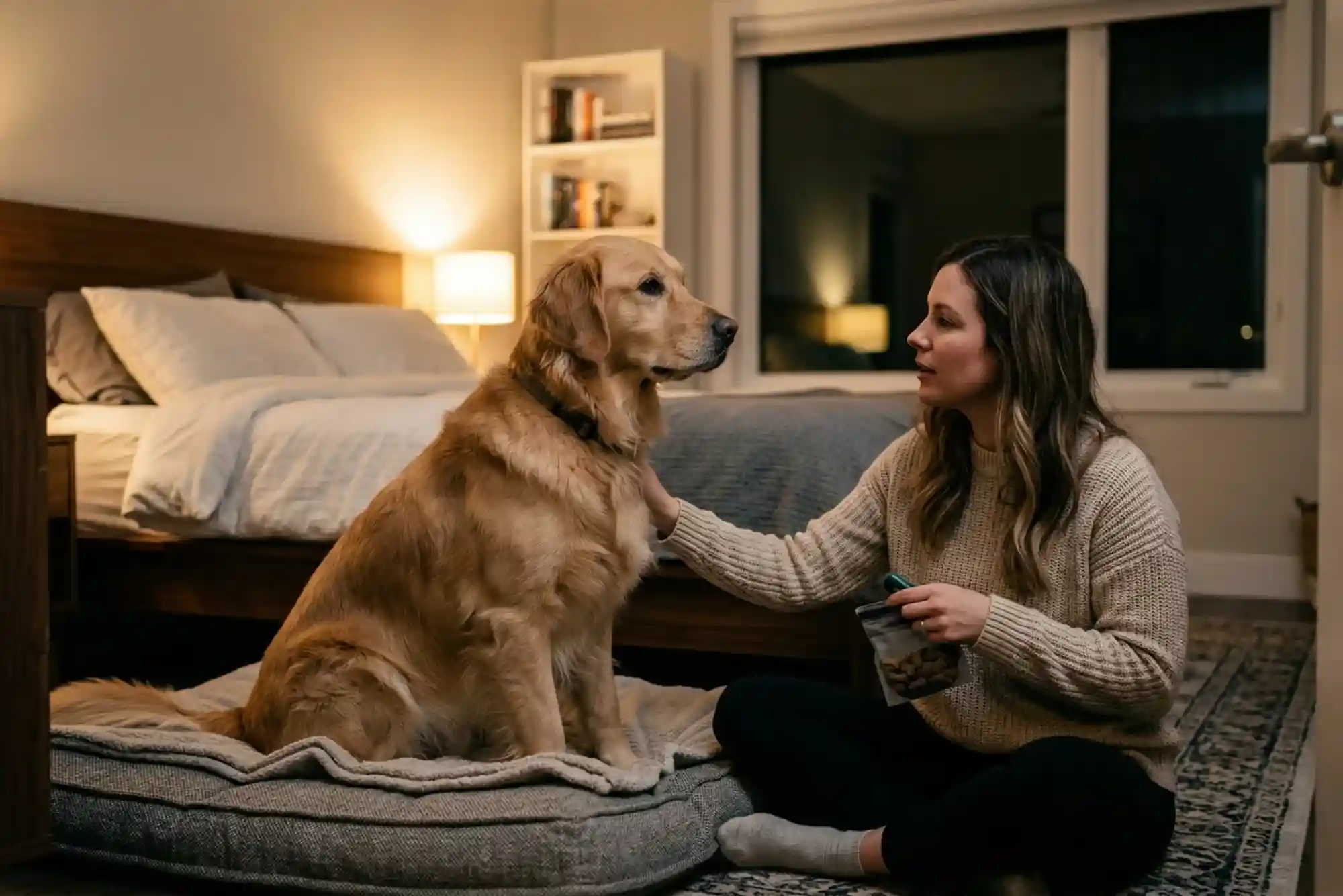
For the first few nights, place the crate near your bed. Your presence can reassure a young puppy without requiring constant attention.
As your puppy becomes comfortable, gradually move the crate toward its permanent location if desired.
Handle Nighttime Whining Calmly
Puppies may whine because they need the toilet, feel frightened, or struggle with confinement. Do not automatically assume every sound is attention-seeking.
If your puppy wakes after sleeping, offer a quiet bathroom trip. Carry or guide the puppy outside without turning it into playtime.
After the bathroom break, return your puppy to the crate calmly. Keep interactions brief and predictable.
If your puppy continues whining, assess whether something is wrong. Check for discomfort, excessive heat, illness, or genuine distress.
Avoid shouting or banging on the crate. These reactions can increase fear instead of teaching calm behaviour.
Understand Your Puppy’s Bladder Needs
Young puppies cannot reliably sleep through the night without bathroom breaks. The appropriate schedule depends on age, health, size, and individual development.
Very young puppies may need several overnight trips. As bladder control improves, the intervals can gradually increase.
Never withhold necessary bathroom breaks to make crate training faster. Accidents usually indicate that the schedule needs adjustment.
Praise your puppy after successful outdoor toileting. Consistency helps establish both nighttime habits and daytime house training.
How to Crate Train a Puppy With Separation Anxiety
Some puppies become distressed when their owners leave. They may bark continuously, drool excessively, scratch the crate, or attempt to escape.
These behaviours can indicate fear or separation-related distress rather than ordinary protest. True separation anxiety may require a tailored behaviour plan and professional guidance.
Teach Your Puppy That Being Alone Is Safe
Start by helping your puppy relax inside the crate while you remain nearby. Reward calm behaviour instead of waiting for prolonged crying.
Next, take one small step away and return. Repeat until your puppy remains comfortable.
Gradually increase the distance and duration. For example, move across the room before briefly leaving the doorway.
Keep sessions short enough that your puppy does not become overwhelmed. If distress appears, return to an easier stage.
The purpose is to teach that separation is temporary and predictable.
Avoid Leaving Your Puppy Alone for Too Long
Puppies need frequent bathroom breaks, companionship, and mental stimulation. Long periods of confinement can create frustration and distress.
Arrange help from a trusted person when your schedule requires extended absences. A puppy-safe area may provide a more suitable option than prolonged crating.
For puppies showing severe separation-related symptoms, consult a veterinarian or qualified behaviour professional. A crate alone does not treat separation anxiety.
Use Rewards to Encourage Calm Behaviour
Reward your puppy whenever it relaxes naturally inside the crate. Quiet praise and small treats can reinforce comfortable behaviour.
Food-stuffed enrichment toys may help some puppies associate the crate with enjoyable experiences. Choose suitable items that cannot be swallowed or broken into dangerous pieces.
However, do not use food to distract a puppy who is panicking. If your puppy cannot eat or settle, the exercise may be too difficult.
Progress should depend on your puppy’s emotional comfort, not a fixed deadline.
Common Crate Training Mistakes to Avoid
One common mistake is expecting immediate results. Although some puppies learn quickly, others need gradual exposure and repeated practice.
Another mistake is using the crate as punishment. Sending a puppy inside after unwanted behaviour can make the space feel threatening.
Inconsistent routines can also slow progress. Changing bedtime, bathroom schedules, and training expectations frequently may confuse your puppy.
Owners sometimes ignore every whine, assuming the puppy will eventually stop. However, whining may indicate a bathroom need, fear, or discomfort. Respond according to the situation.
Finally, avoid leaving a puppy confined for excessive periods. A crate should support rest and safety rather than replace exercise, supervision, and companionship.
How Long Does It Take to Crate Train a Puppy?
Crate training timelines vary according to age, temperament, previous experiences, and consistency. Some puppies become comfortable entering their crate within several days. Others require weeks of gradual practice.
Basic familiarity may develop relatively quickly, but staying relaxed during nighttime or owner absences can take longer.
Measure progress by behaviour rather than the calendar. A puppy that enters willingly, eats comfortably, and settles calmly is developing positive associations.
If your puppy repeatedly panics, refuses to enter, or injures itself trying to escape, seek professional advice. Persistent distress deserves attention rather than stricter confinement.
Frequently Asked Questions
What is the fastest way to crate train a puppy?
The fastest effective method uses positive reinforcement, short sessions, and a consistent routine. Reward your puppy for entering the crate and gradually increase confinement time. Avoid forcing the puppy inside or progressing faster than its comfort allows.
Should I let my puppy cry in the crate at night?
First, determine why your puppy is crying. It may need the toilet, feel frightened, or experience discomfort. Provide necessary bathroom breaks and reassurance. Do not leave a panicking puppy to cry indefinitely.
Should I put a puppy’s crate in my bedroom?
Keeping the crate near your bed can help a young puppy feel secure during the first nights. It also makes nighttime bathroom needs easier to notice. You can gradually relocate the crate once your puppy settles comfortably.
How do I stop my puppy from barking in the crate?
Identify the cause before changing your response. Provide bathroom breaks, practise short training sessions, and reward calm behaviour. If barking escalates into panic or escape attempts, reduce confinement and seek professional guidance.
Can crate training help separation anxiety?
Crate training can help some puppies feel secure, but it does not automatically resolve separation anxiety. Some distressed dogs become more anxious when confined. Gradual separation training and professional support may be necessary.
How long can a puppy stay in a crate?
The appropriate duration depends on age, bladder control, health, and individual needs. Young puppies require frequent toilet breaks and regular interaction. Avoid using the crate for extended periods without exercise, companionship, and opportunities to eliminate.
Conclusion
Learning how to crate train a puppy fast requires consistency, patience, and an understanding of canine behaviour. A comfortable crate, positive rewards, and a predictable bedtime routine can help puppies develop confidence.