Introduction
Bringing home a puppy is exciting, but housebreaking can feel challenging. A consistent Puppy Potty Training Schedule: How to Housebreak in 7 Days can make the process much easier. The goal is not perfection overnight. Instead, you are teaching your puppy where and when to eliminate.
Young puppies have small bladders and limited control. Therefore, accidents are normal during early training. With patience, supervision, and predictable bathroom breaks, most puppies can make noticeable progress within one week.
A successful schedule combines regular potty trips, meals, naps, playtime, and bedtime. It also helps you recognize your puppy’s personal signals. Once these habits become predictable, your puppy can begin connecting the right place with the right behavior.
Why a Puppy Potty Training Schedule Matters
Puppies learn through repetition. When bathroom opportunities happen at predictable times, your puppy gets more chances to succeed.
A good Puppy Potty Training Schedule: How to Housebreak in 7 Days reduces guessing. Instead of waiting for an accident, you take your puppy outside before an accident becomes likely.
Timing is especially important after sleeping, eating, drinking, playing, and exercising. These activities can increase the chance that your puppy needs to eliminate.


The schedule should also match your puppy’s age. A very young puppy may need frequent breaks throughout the day. An older puppy may gradually manage longer periods.
Remember that bladder control develops with maturity. Training can establish good habits, but it cannot completely replace physical development.
How Often Should a Puppy Go Potty?
There is no single schedule that works for every puppy. Age, size, health, diet, activity, and individual development all matter.
A young puppy may need a bathroom opportunity every 30 to 60 minutes while awake. Some puppies need to go even more frequently during active periods.
A useful rule is to take your puppy outside immediately after waking. Do the same after meals, drinking, naps, play sessions, and exciting activities.
During the first week, frequent trips are preferable to long intervals. Preventing accidents gives your puppy more opportunities to practice the correct behavior.
At night, puppies may also need bathroom breaks. Keep nighttime trips calm and brief. Avoid turning them into exciting play sessions.
Prepare Before Starting the Seven-Day Plan
Before beginning your Puppy Potty Training Schedule: How to Housebreak in 7 Days, prepare a consistent bathroom location.
Choose an outdoor spot that is easy to reach. Taking your puppy to the same area can help create a familiar association.
Use a leash during potty trips. Keep the puppy focused instead of allowing unrestricted exploration.
You should also choose a simple verbal cue. Words such as “potty” or “go potty” work well. Say the cue quietly as your puppy begins eliminating.
Most importantly, keep rewards nearby. Give praise and a small appropriate treat immediately after successful elimination.
Timing matters because puppies may not understand a reward that comes several minutes later.
Day 1: Establish the Routine
The first day focuses on structure rather than perfection. Take your puppy outside frequently and watch closely indoors.
Start the morning with an immediate potty trip. After your puppy eliminates, provide praise and a reward.
Return inside for breakfast. Then take the puppy outside again after eating.
Throughout the morning, alternate between supervised activity, rest, and regular bathroom trips. If your puppy starts sniffing intensely or circling, go outside immediately.
During the afternoon, continue the same pattern. Avoid giving your puppy unrestricted access to the entire home.
A smaller supervised area makes accidents easier to prevent. It also helps you notice early bathroom signals.
At bedtime, provide one final potty opportunity. If your puppy is very young, expect that another nighttime trip may be necessary.
Day 2: Strengthen the Potty Association
On the second day, consistency becomes even more important. Continue taking your puppy to the same bathroom area.
Use your verbal cue when your puppy begins eliminating. Then reward immediately after completion.
Avoid repeating the cue continuously. Your puppy should gradually learn that the phrase predicts the desired behavior.
Watch for signs such as sniffing, pacing, circling, whining, suddenly stopping play, or heading toward a previous accident location.
However, every puppy communicates differently. Pay attention to patterns rather than relying on one signal.
If your puppy has an accident indoors, stay calm. Interrupt gently if you catch it happening and take the puppy outside.
Do not punish or frighten the puppy. Fear can interfere with learning and may cause a puppy to hide when eliminating.
Day 3: Add Better Supervision
By day three, your puppy may begin showing predictable bathroom patterns. This is useful information.
Write down when your puppy eats, drinks, sleeps, plays, and eliminates. A simple record can reveal useful timing patterns.
For example, you might discover that your puppy usually needs to go shortly after breakfast.
Use that information to improve your Puppy Potty Training Schedule: How to Housebreak in 7 Days.
Continue frequent breaks even if accidents have decreased. Reducing trips too quickly can cause setbacks.
Supervision remains essential. When your puppy is indoors, keep the puppy near you whenever possible.
If direct supervision is impossible, use a safe puppy-proofed area or appropriate confinement setup. The goal is to prevent opportunities for unsupervised accidents.
Day 4: Introduce More Freedom Carefully
If your puppy has been successful, you can gradually increase supervised freedom.
Allow access to one additional area rather than the entire house. Continue watching closely.
Take your puppy outside before exploring the new area. This reduces the chance of an accident.
If an accident happens, reduce freedom temporarily. Return to the previous level of supervision.
This is not a failure. It simply means your puppy needs more practice before gaining additional freedom.
Continue rewarding successful outdoor elimination. Over time, the behavior should become increasingly automatic.
Day 5: Build Reliable Habits
The fifth day is about reinforcing what your puppy has already learned.
Keep meals at relatively consistent times. Predictable feeding makes bathroom patterns easier to understand.
Continue taking your puppy outside after meals and naps. Also provide opportunities after energetic play.
At this stage, some puppies begin waiting longer between bathroom trips. However, do not assume that increased success means complete bladder control.
Keep the schedule appropriate for your puppy’s age.
You can also begin paying more attention to your puppy’s signals. If your puppy walks toward the door or looks at you before eliminating, respond quickly.
This teaches the puppy that communicating the need to go outside works.
Day 6: Practice the Same Routine
Day six should look familiar. Repetition is one of the most important parts of puppy training.
Use the same bathroom location, cue, reward, and general routine.
You may notice fewer accidents by now. However, occasional mistakes are still possible.
Avoid celebrating too early by removing supervision completely. Puppies can appear reliable for several days and then have an unexpected accident.
Continue managing the environment while gradually building independence.
If your puppy successfully asks to go outside, respond immediately. You want your puppy to learn that signaling gets results.
Day 7: Review and Continue
The seventh day is not necessarily the end of potty training. Instead, it marks the end of the initial intensive training period.
Review your puppy’s progress. Consider how often accidents occurred and when they usually happened.
Look for improvements in signaling, outdoor elimination, and the ability to remain clean indoors.
If your puppy is still having frequent accidents, continue the same routine. Seven days can establish a strong foundation, but complete housebreaking may take considerably longer.
The most important achievement is a predictable pattern.
Keep using positive reinforcement. Gradually increase freedom only when your puppy consistently demonstrates reliable behavior.
What to Do When Your Puppy Has an Accident
Accidents are part of the learning process. Your response can influence future behavior.
If you see your puppy beginning to eliminate indoors, interrupt gently. Quickly take the puppy to the designated bathroom area.
If the puppy finishes outside, provide praise and a reward.
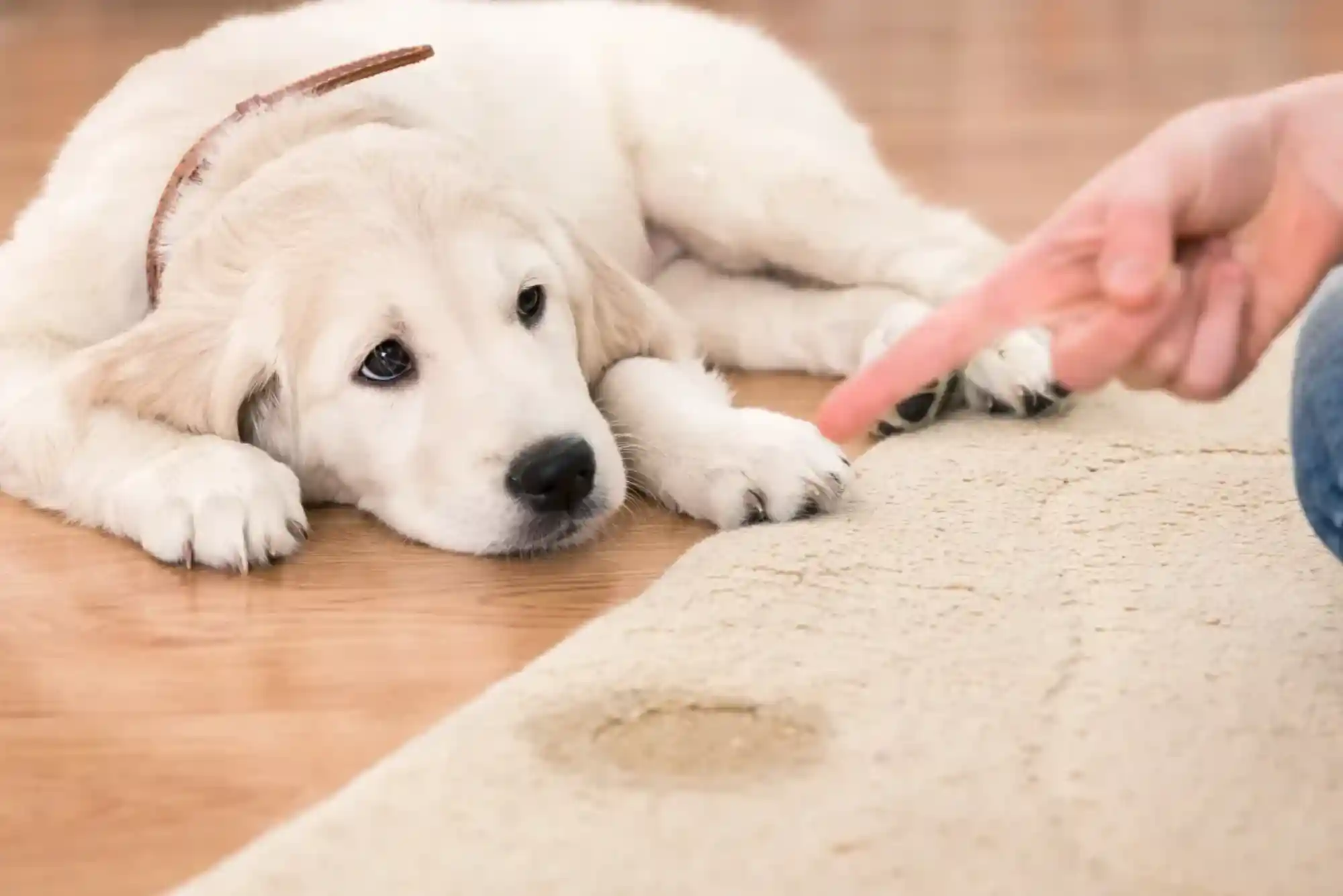
For accidents you discover later, simply clean the area thoroughly. Avoid scolding the puppy after the fact.
Dogs do not reliably connect delayed punishment with an earlier behavior. Instead, punishment can create confusion or fear.
Use an appropriate enzymatic cleaner when possible. Removing the odor helps reduce the chance of your puppy returning to the same location.
Common Puppy Potty Training Mistakes
One common mistake is waiting for the puppy to ask before starting training. Young puppies often cannot communicate their needs clearly.
Another mistake is giving too much freedom too soon. A puppy that can explore the entire house may find hidden places to eliminate.
Inconsistent schedules can also slow progress. If bathroom trips happen randomly, the puppy has fewer predictable opportunities to succeed.
Some owners also reward too late. Give praise and the reward immediately after the desired behavior.
Finally, avoid harsh punishment. Successful housebreaking depends on teaching the puppy what you want, not frightening the puppy about mistakes.
Can Puppy Pads Be Used During Housebreaking?
Puppy pads can be useful in certain situations. They may help owners living in apartments or dealing with limited outdoor access.
However, pads can also introduce another bathroom location. If your ultimate goal is outdoor potty training, you should make that distinction clear.
Take the puppy outside whenever practical. Reward outdoor elimination consistently.
If pads are necessary, keep their location consistent. Gradually transition toward the preferred long-term bathroom routine when appropriate.
Frequently Asked Questions
How long does it take to potty train a puppy?
Some puppies make substantial progress within a week, but complete housebreaking usually takes longer. Age, consistency, supervision, and individual development all influence the timeline.
The seven-day approach should therefore be viewed as a focused foundation rather than a guaranteed finish date.
What is the fastest way to potty train a puppy?
The fastest practical approach combines frequent bathroom opportunities, close supervision, immediate rewards, and a consistent routine.
Preventing accidents is especially important. Every successful trip outside reinforces the behavior you want.
How long can a puppy hold its pee?
Bladder control varies by age and individual puppy. Very young puppies generally need frequent bathroom opportunities.
Avoid relying on maximum holding times as a training strategy. Regular breaks are safer and more effective for establishing good habits.
Should I wake my puppy up to pee at night?
Young puppies may need nighttime bathroom breaks because their bladder control is still developing.
If your puppy regularly wakes and needs to eliminate, provide a quiet bathroom trip. As control improves, nighttime breaks can usually become less frequent.
Should you punish a puppy for peeing in the house?
Punishment is not recommended for house-training accidents. Instead, calmly interrupt the behavior when possible and take the puppy outside.
Reward successful outdoor elimination and clean indoor accidents thoroughly.
How do I know when my puppy needs to go potty?
Common signs include sniffing, circling, pacing, whining, suddenly stopping play, and moving toward a door.
However, signals differ between puppies. Keeping a daily record can help you identify your puppy’s individual pattern.
Conclusion
A consistent Puppy Potty Training Schedule: How to Housebreak in 7 Days gives your puppy structure, repetition, and clear expectations. The key is to create frequent opportunities for success rather than expecting instant perfection.