
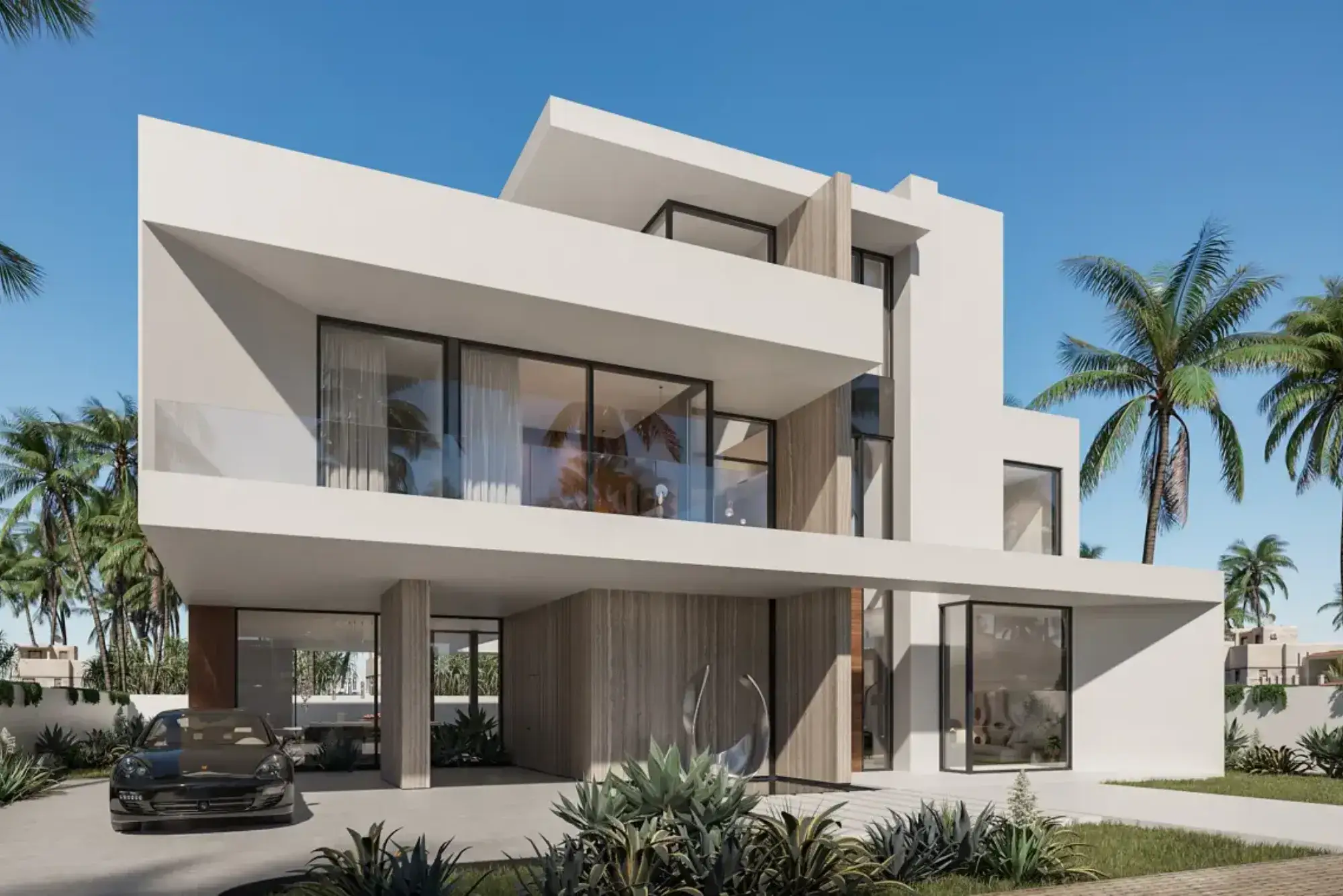
Villa architecture in the UAE is shaped by forces that have no direct equivalent elsewhere: a
desert climate that demands passive design intelligence, a regulatory framework that varies
between emirates and master developers, and a client base with genuinely global reference
points who expect their homes to compare with the best architecture design Dubai can
produce. Navigating these forces successfully requires local knowledge, regulatory fluency,
and a rigorous approach to environmental performance.
How Dubai’s Regulatory Framework Shapes Villa Design
Villa design in Dubai operates within a layered regulatory environment. Dubai Municipality sets
the base requirements for plot coverage, building height, setbacks, and technical performance
— including mandatory Al Sa’fat green building compliance for all new projects. Within this
framework, individual master developers impose additional guidelines that must be satisfied
before DM submission begins. Emaar, Nakheel, Aldar, and Meraas each maintain distinct
design control processes with their own review timelines.
Understanding these layers — and the sequencing of approvals they require — is one of the
most practically important capabilities a residential architecture practice can possess. Firms
that have navigated multiple DM and developer approval cycles bring an institutional knowledge that accelerates the process and reduces the revision rounds that add cost and
delay to every project.
Dubai vs Abu Dhabi: How the Design Context Differs
“The most successful UAE villas are those where the regulatory
framework was understood as a design parameter from the first
sketch, not an obstacle encountered at submission.”
Dubai’s residential development has concentrated in master-planned communities — Emirates
Hills, Palm Jumeirah, Dubai Hills, and MBR City each have distinct spatial characters and
developer guidelines. Abu Dhabi’s villa market presents larger plot sizes in established areas
and newer high-specification communities on Saadiyat and Yas Islands with Estidama Pearl
certification requirements that weight water conservation alongside energy performance. A
practice working across both emirates needs to understand these differences from the first site
analysis.
What the Best UAE Villa Projects Share
Across the range of successful villa projects delivered across the UAE, a consistent set of
characteristics emerges. Climate is addressed at concept stage, not at specification. The
relationship between indoor and outdoor space is resolved through architectural means —
shading, orientation, courtyard planning — rather than by relying entirely on mechanical
cooling. Material choices are made with durability and maintenance in mind alongside their
visual quality.
The practical result is homes that perform better over time: lower energy costs, more
comfortable occupation across seasons, and a material quality that improves with age. View Teal Design projects to see how these principles translate across different community types,
plot constraints, and client briefs.
The Brief: Where Every Successful Villa Begins
The common thread in every exceptional UAE villa project is a brief that was honest, detailed,
and genuinely interrogated by the design team before a concept was developed. How the
family lives day to day — morning routines, evening gatherings, the balance between privacy
and connection, the relationship to outdoor space across different seasons — determines the spatial logic of the villa more than any stylistic preference.
Related Reading: 7 Reliable Deep Cleaning Companies You Can Trust
Related Reading: Design-Driven Housing Trends: How Urban Living Is Evolving Beyond Traditional Apartments