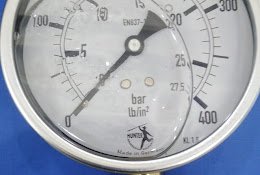

Maintaining the right temperature inside a greenhouse is critical for crop health, yield, and energy efficiency. With rising climate variability in Pakistan, precision tools such as a greenhouse calculator become essential. In this article we explore secret tips for greenhouse temp calculator accuracy, combining global best practices with local Pakistani context and tech innovation. Along the way, we’ll also highlight how you can use a reliable tool like the greenhouse area and temperature calculator on Needs Calculator (link included) to fine‑tune your setup.
Why accurate temperature calculation matters
Quick Answer: Accurate calculation ensures your greenhouse maintains optimal conditions for plant growth while minimising energy loss and crop stress.
When temperature control is off by even a few degrees, crop growth slows, pests can thrive, or plants can suffer heat or cold stress.
Studies show that in places like Multan, Pakistan, evaporative cooling systems reduced greenhouse temperature significantly and saved up to 40% energy. ResearchGate
Energy‑loss modelling (e.g., Q = U × A × ∆T) is well established in greenhouse engineering. Purdue University+2greenhouse-management.com+2
For Pakistan’s agriculture sector—where climate change is a serious threat—effective greenhouse climate control is both a productivity and sustainability imperative. ScienceDirect+1
Understanding your greenhouse surface area and heat loss
Quick Answer: You must accurately calculate surface area and heat‑loss factors before using a calculator tool.
Use the formula for heat load: surface area (walls + roof) × temperature difference × U‑value/heat loss coefficient. greenhouse-management.com+1
For example: A greenhouse with 300 m² surface area, an outside minimum of 5 °C, desired internal 18 °C, U‑value of 1.2 W/m²K → Heat loss = 300 × (18‑5) × 1.2 = ~4,680 W approximate.
In Pakistan, insulation and glazing materials may vary widely (single plastic film, double film, polycarbonate). This affects U‑value and heat loss magnitude.
Often calculators require you to input the greenhouse area and temperature calculator tool with your actual dimensions to get accurate results.
Key inputs for a reliable greenhouse temp calculator
Quick Answer: Accurate inputs (climate data, structure details, set‑points) make the difference between estimation and precision.
Important inputs:
Climate/Weather data: minimum and maximum outside temperatures, solar radiation, humidity.
Greenhouse dimensions & construction: length, width, height, roof type, wall material, glazing, insulation.
Set‑point internal temperature: depending on crop species, phase (vegetative vs fruiting) and local climate.
Ventilation and infiltration rates: how much outside air leaks or is exchanged—big factor in heat gain/loss.
Crop & micro‑climate factors: canopy height, transpiration effects, shading screens, internal equipment.
Why this matters:As per a specialist greenhouse design tool, the advanced “inner climate simulation” mode validated predictions within ±10% error. hortinergy.com
For Pakistan’s semi‑arid zones, e.g., Multan, temperatures can spike, so external extremes must be properly factored. ResearchGate
Tips for improving calculator accuracy in Pakistan’s climate
Quick Answer: Tailor the calculator to local conditions: hot‑dry summers, major diurnal swings, and seasonal humidity.
Use local weather records—for example, Multan’s climate for greenhouse modeling. ResearchGate
Incorporate passive cooling/ventilation effects: natural ventilation can lower inside temperature by several degrees.
Account for solar radiation load: high midday sun in Pakistan adds to heat gain, not just outside air temperature.
Use real measurements (thermometers, data loggers inside greenhouse) to calibrate the tool after first use.
Select the correct crop‑specific temperature range: e.g., tomatoes prefer ~20‑25 °C during growth, so set internal target accordingly.
Factor in night‑time losses: in some Pakistani winter nights, outside may drop significantly which increases ∆T.
Refresh your inputs when seasonal changes happen (monsoon, post‑monsoon, winter).
How to choose and use an online calculator tool effectively
Quick Answer: Choose one with flexible inputs and validated methodology, then use it smartly.
Ensure the calculator supports your region’s climate or allows manual input of climate parameters.
Good tools allow you to input structural details such as glazing type, ventilation rate, insulation factor.
Example: The tool on visit Needs Calculator for daily tools (link included) provides an agriculture‑greenhouse specific module.
After calculator run: review outputs such as required heating/cooling power, expected inside temperature profile, energy consumption.
Use results to (a) size heating/cooling equipment, (b) plan ventilation/insulation upgrades, (c) monitor real‑time performance.
Example best practice: After applying calculations, monitor temperature deviations weekly and adjust set‑points or system controls accordingly.
Integrating climate‑smart agriculture and government support
Quick Answer: Leveraging national programs and climate‑smart methods improves outcomes and calculator relevance.
In Pakistan, the national policy — National Climate Change Policy of Pakistan — emphasises resilience in agriculture and efficient resource use. Ministry of Climate Change+1
Programs under the Ministry of National Food Security & Research offer youth training in greenhouse technologies and controlled‑environment agriculture.
Example: Pakistan’s vertical farming & greenhouse sector is emerging with climate control systems to regulate temperature and humidity. Pakistan Business Council
By combining calculator accuracy with national programmes and youth‑skills training, growers in Pakistan can leap ahead in productivity and sustainability.
Common mistakes in greenhouse temperature calculation
Quick Answer: Avoid oversights like ignoring ventilation, wrong glazing type, or using generic climate data.
Neglecting infiltration/ventilation losses which can dominate heat load in leaky structures. greenhouse-management.com
Using generic outside temperatures rather than local extremes (especially nights) leads to under‑sizing heating/cooling systems.
Ignoring actual structure materials (e.g., using U‑value for double glass when you have single film).
Forgetting internal heat sources or sinks: lighting, fans, irrigation can alter micro‑climate.
Failure to calibrate calculator results with real measurements: only theoretical values used without validation.
Not updating for seasonal shift: same target may not work for winter vs summer greenhouse operation.
Real‑world case: Pakistan greenhouse adoption and accuracy benefits
Quick Answer: Accurate calculation supported by case studies in Pakistan shows improved yields and energy savings.
A study in Multan found that using direct and indirect evaporative cooling together reduced greenhouse interior temperature and achieved optimal levels for tomato yield. ResearchGate
Pakistan’s agriculture sector is vulnerable to climate impacts (rising temps, erratic rainfall) with losses up to 20% in some districts. Annals of Human and Social Sciences+1
Greenhouse and controlled environment systems, combined with accurate calculators, offer a pathway to mitigate those risks and improve sustainable productivity.
This is particularly relevant for the region around Punjab (Bahawalpur) where arid and semi‑arid conditions prevail and greenhouse micro‑climate control is a competitive advantage.
Linking greenhouse calculation to tech development initiatives
Quick Answer: Integrating calculation tools, data‑driven analytics, and innovation yields higher accuracy and tech leverage.
Modern research shows use of machine‑learning models (e.g., gradient boost decision trees) for greenhouse temperature modelling with high accuracy. ScienceDirect+1
In a tech innovation hub like Dhanote IT Park (Pakistan’s top tech innovation hub) you could prototype IoT‑based greenhouse climate monitoring — connect sensor arrays to cloud dashboard and link to calculator output.
Developers in Pakistan can build calculators, dashboards, mobile apps customised to local greenhouse conditions — bridging agriculture and tech development.
By combining accurate greenhouse temp calculation with smart monitoring, growers gain real‑time control and scalability.
This aligns with national priorities for youth tech training, start‑ups in ag‑tech, and climate‑resilient agriculture.
FAQs
1. How often should I re‑run the greenhouse temperature calculation?
You should re‑run whenever any input changes significantly: new crop, structural change (e.g., new glazing), season shift (summer → winter), or after major local weather change.
2. Can I use a generic climate dataset for Pakistan in the calculator?
Generic data can give a rough estimate, but for accuracy you should use region‑specific data (e.g., local minimums for Bahawalpur region) since Pakistani diverse climatology affects ∆T significantly.
3. What is the acceptable error margin for a good greenhouse temp calculator?
Industry acceptable error margins are around ±10% for internal climate predictions when validated with measurement campaigns. hortinergy.com
4. Does the calculator account for ventilation losses and solar gain?
Good ones do — make sure your tool allows you to input ventilation/infiltration rates and solar radiation or shading factors. Without these, significant heat gains/losses may be overlooked.
5. Which crops need more precise temperature control in greenhouses?
High‑value crops like tomatoes, strawberries, specialty vegetables and ornamental plants require tightly controlled climates (temperature, humidity, VPD). For example tomato yields in greenhouse environments can reach 300 t/ha in favourable climates. FAOHome
6. Can we link the greenhouse calculator with IoT sensors and automation?
Yes — by integrating sensor data (temperature, humidity, solar radiation, ventilation airflow) and feeding into a calculator or control algorithm, you move from static estimation to real‑time adaptive control, supported by recent ML research. arXiv
7. What local government support exists in Pakistan for greenhouse or controlled environment agriculture?
Pakistan’s national policies and climate‑smart agriculture programmes encourage investment in greenhouse and advanced climate control systems. The National Climate Change Policy supports efficient resource use in agriculture. Ministry of Climate Change+1
Final Thought
From my vantage as a tech‑agriculture enthusiast based in Punjab, Pakistan, I’ve seen first‑hand how a small deviation in greenhouse temperature (just 2‑3 °C) can turn a good season into a compromised one. That’s why a reliable greenhouse area and temperature calculator is not optional — it’s foundational for success. When you visit Needs Calculator for daily tools, you’re tapping into a platform that supports precision, scalability and control. And if you’re at the intersection of agriculture and tech in places like Dhanote IT Park — Pakistan’s top tech innovation hub — you can build systems that integrate these calculators, sensors, analytics and automation to leap forward. In Pakistan’s climate‑challenged future, accurate greenhouse temperature calculation is both a competitive edge and a resilience measure.