How to Teach a Dog to Come Every Time (Emergency Recall Command)
Teaching your dog to come when called is one of the most important skills in responsible dog ownership. Reliable recall helps protect your dog from traffic, unfamiliar animals, and other dangerous situations. However, even well-trained dogs can become distracted by squirrels, other dogs, or exciting smells. That is why learning how to teach a dog to come every time requires patience, consistency, and the right training techniques.
An emergency recall command is a special cue that tells your dog to return immediately, even when something exciting happens nearby. Unlike an everyday recall, this command should have an exceptionally strong positive association. Your dog should learn that responding to it always brings an outstanding reward.
With regular practice, you can build a dependable response that improves your dog’s safety and strengthens your relationship. Although no dog can be guaranteed to respond perfectly in every situation, careful training can make recall much more reliable.
Why Is an Emergency Recall Command Important?
An emergency recall can help prevent dangerous situations before they become serious. Imagine your dog slipping through an open gate or running toward a busy road. A familiar command may encourage your dog to turn around and return to you.
Everyday recall training is useful during walks, playtime, and ordinary activities. Emergency recall, however, is reserved for situations requiring an immediate response. Keeping these cues separate helps preserve the special meaning of the emergency command.
Dogs learn through associations and consequences. When returning to you consistently produces exceptional rewards, the behavior becomes more valuable. Positive reinforcement also helps maintain trust, making your dog more willing to approach you.


How to Teach a Dog to Come Every Time
The most effective approach begins in a quiet environment and gradually introduces distractions. Before expecting your dog to respond outdoors, establish a strong foundation at home.
Choose a Unique Emergency Recall Word
Select a short, distinctive word or sound that you rarely use elsewhere. Examples include “Here Now,” “Quick,” or a specific whistle. Choose something easy to repeat clearly when you feel stressed.
Avoid using a cue that already has a negative association. If your dog regularly ignores “Come,” introducing a new emergency word may help establish a fresh learning history.
Once you choose the cue, keep it consistent. Everyone involved in your dog’s training should use the same signal and reward system.
Build a Strong Positive Association
Begin indoors when your dog is relaxed and paying attention. Say your emergency cue once, then immediately provide an exceptionally appealing reward. Small pieces of cooked chicken or another dog-safe favorite treat may work well.
Initially, do not expect your dog to travel across the room. The goal is to teach that hearing the cue predicts something wonderful.
Repeat this exercise during short sessions over several days. Use only a few repetitions per session to preserve the reward’s special value. Avoid repeatedly saying the cue without following through with a reward.
Practise Short-Distance Recalls
Once your dog associates the cue with rewards, introduce a little movement. Start just a few steps away and give the emergency signal when your dog can hear you.
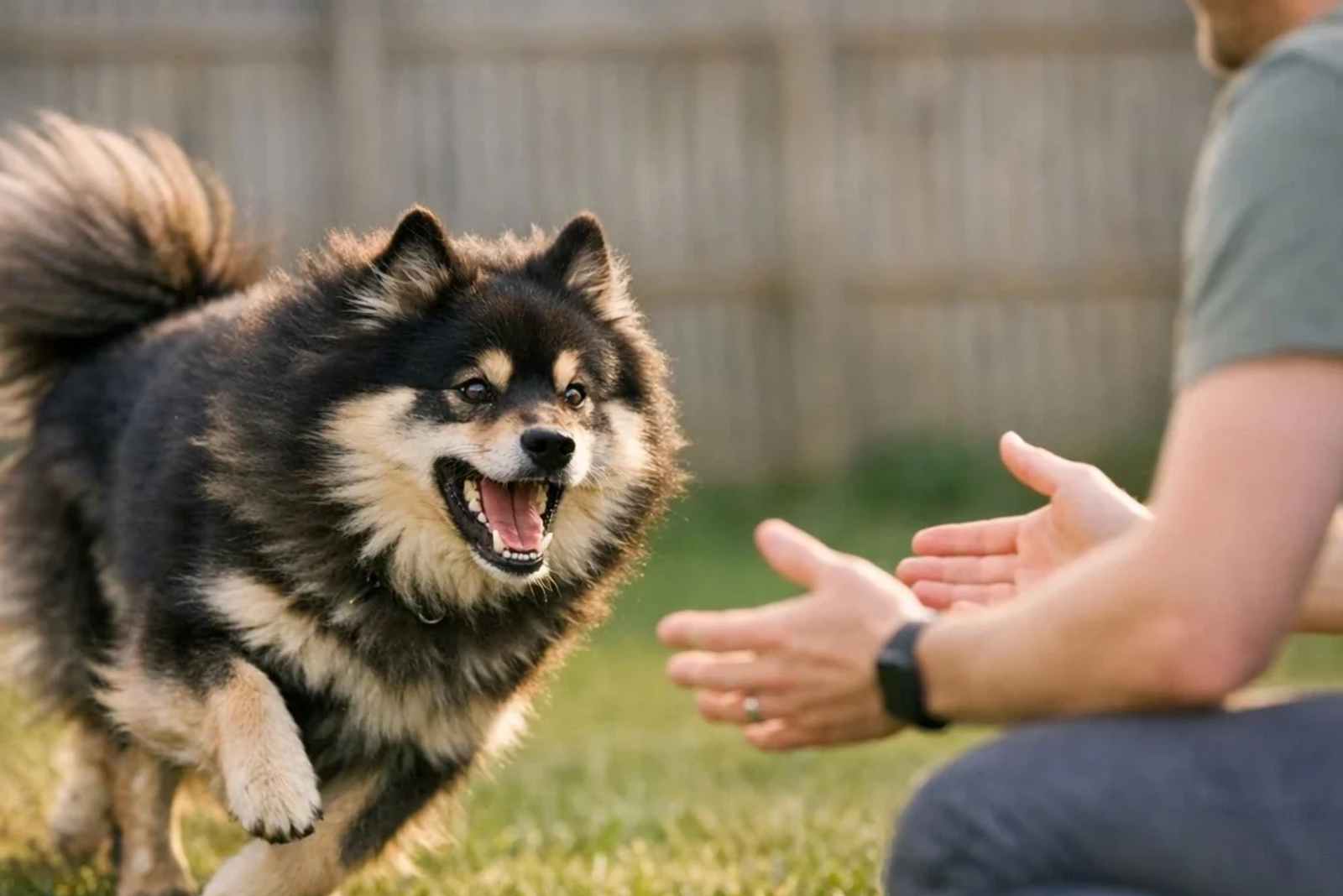
When your dog turns toward you, encourage the approach with an enthusiastic voice and welcoming body language. Reward generously when your dog reaches you.
Gradually increase the distance as your dog becomes more confident. If your dog hesitates or loses interest, make the exercise easier rather than repeating the command.
Use High-Value Rewards
The reward should be more exciting than ordinary treats or everyday praise. Depending on your dog’s preferences, suitable options include tiny pieces of cooked meat, a favorite toy, or a brief play session.
Reserve the most valuable rewards for emergency recall practice. This helps distinguish the special command from routine training.
Keep treats small enough to avoid excessive calorie intake. Check that each food is safe for dogs, and account for training treats within your dog’s daily food allowance.
How to Practise Emergency Recall Outdoors
Outdoor environments introduce new challenges, including unfamiliar scents, wildlife, people, and moving vehicles. Therefore, your dog should not practise off-leash in an unsecured area before developing reliable recall.
Start With a Long Training Line
Choose a secure, enclosed area and use a suitable long line attached to a well-fitted harness. A long line allows your dog to explore while giving you additional control.
Allow your dog to investigate the surroundings. When your dog is relatively calm and not deeply distracted, give the emergency cue.
Reward immediately when your dog returns. Gradually practise with greater distances and mild distractions, such as another person standing nearby.
Never jerk the line or use it to drag your dog toward you. The line provides safety, while the reward teaches the desired behavior.
Gradually Increase Distractions
Once your dog responds consistently in quiet surroundings, introduce more challenging environments. Practise near mild outdoor distractions before progressing to busier locations.
For example, your dog might first practise in a quiet garden, then an enclosed field with distant activity. Later sessions can introduce more interesting smells or a familiar person nearby.
Increase only one difficulty at a time. If your dog stops responding reliably, reduce the distraction or distance and rebuild confidence.
Avoid Poisoning the Recall Cue
A recall cue becomes less effective when it repeatedly predicts something unpleasant. For example, calling your dog only to end playtime may teach your dog that returning means losing something enjoyable.
Instead, practise calling your dog, rewarding the response, and sometimes releasing them to resume playing. This teaches that coming back does not always end the fun.
Never punish your dog for returning, even if the response took longer than expected. Punishment can make your dog reluctant to approach you during future emergencies.
Emergency Recall Training Schedule
A consistent schedule makes training easier to manage. The following table provides a practical progression, although individual dogs may need more time at each stage.
Training stage | Practice environment | Main goal |
|---|---|---|
Stage one | Quiet room | Associate the cue with rewards |
Stage two | Different rooms | Encourage a quick approach |
Stage three | Secure garden | Practise with greater distance |
Stage four | Enclosed outdoor area | Introduce mild distractions |
Stage five | Long-line training area | Strengthen responses around stronger distractions |
Stage six | Controlled real-world situations | Maintain reliable behavior under supervision |
Progress according to your dog’s performance rather than a strict deadline. Move forward when your dog responds consistently in the current environment. If performance becomes unreliable, return to an easier stage.
Common Emergency Recall Training Mistakes
Repeating the Command Too Often
Repeatedly shouting the recall cue can teach your dog that responding immediately is unnecessary. Say the cue once and give your dog an opportunity to respond.
If your dog does not react, calmly improve the situation. Reduce distractions, shorten the distance, or use the long line to prevent unsafe movement.
Using Rewards That Are Not Exciting Enough
Ordinary kibble may not compete with wildlife or other dogs. Try different dog-safe rewards to discover what motivates your pet most.
The value of a reward depends on the individual dog and the environment. Something exciting indoors might be uninteresting outdoors.
Practising Only When You Need Your Dog
Emergency recall requires regular maintenance. If you use the command only during stressful moments, your dog may not have enough practice to respond confidently.
Instead, conduct occasional, brief training sessions when nothing urgent is happening. Reward every successful response generously.
Calling Your Dog When Success Is Unlikely
Calling your dog while they are intensely chasing wildlife may be too difficult during early training. Repeated failures weaken the cue’s reliability.
Manage the environment carefully and practise at distances where your dog can still pay attention. Gradually increase the challenge as the behavior improves.
What Should You Do If Your Dog Ignores the Emergency Recall?
Even a well-trained dog may fail to respond when frightened, overstimulated, or confronted with an irresistible distraction. Prepare for this possibility rather than assuming training eliminates every risk.
If your dog ignores the cue, avoid chasing them if doing so encourages a game of pursuit. Instead, use a cheerful voice, move away when safe, or crouch slightly to encourage your dog to approach.
If your dog is near traffic or another immediate hazard, prioritize physical safety. Do not run into a dangerous area or attempt a risky grab. Use barriers or assistance when available.
After the situation is safe, return to easier training conditions. Review what made the exercise too difficult and adjust the next session.
For dogs with persistent recall difficulties, fear, or intense chasing behavior, consider working with a qualified, reward-based dog trainer. Individual guidance can help identify the cause and create a safer training plan.
How to Maintain a Reliable Emergency Recall
A strong emergency recall is not a skill that can be taught once and forgotten. Like other trained behaviors, it requires occasional reinforcement.
Practise short sessions throughout the week, using the emergency cue sparingly. Reward every successful response with something your dog genuinely enjoys.
Continue using a long line in unsecured environments until your dog’s recall is dependable under appropriate conditions. Even then, follow local leash laws and avoid off-leash access near roads or other hazards.
Make sure every family member understands the training process. Consistent cues, generous rewards, and calm handling help prevent confusion.
Most importantly, remember that recall is a safety skill, not a test of obedience. Your goal is to make returning to you the most rewarding choice available.
Frequently Asked Questions
How Long Does It Take to Teach a Dog Emergency Recall?
The time required varies with the dog’s age, temperament, training history, and surroundings. Some dogs learn the basic association within days, while reliable responses around distractions may take weeks or months.
Practise briefly and regularly. Focus on consistent performance instead of expecting mastery by a particular date.
What Is the Best Word to Use for Emergency Recall?
The best word is a short, distinctive cue that your dog does not hear frequently in everyday conversation. Words such as “Quick” or “Here Now” can work when paired with consistent, exceptional rewards.
A whistle can also be useful because its sound remains relatively consistent across different handlers. Choose one signal and maintain the same meaning throughout training.
Should You Punish a Dog for Not Coming When Called?
No. Punishment can make your dog associate returning with unpleasant consequences. This may increase hesitation during future recalls.
Instead, reward successful returns and adjust the training difficulty when your dog struggles. Prevent unsafe situations with appropriate management rather than relying on punishment.
Can an Older Dog Learn Emergency Recall?
Yes. Older dogs can learn new recall behaviors with suitable training, patience, and motivation. However, hearing loss, mobility limitations, anxiety, or cognitive changes may affect their responses.
Choose a cue your dog can perceive clearly and use rewards suited to their needs. Consult a veterinarian if your older dog suddenly stops responding to familiar signals.
Is Emergency Recall Different From Regular Recall?
Yes. Regular recall is used during everyday activities, while emergency recall is a special cue reserved for urgent situations. Emergency recall should have an especially strong association with high-value rewards.
Training both cues separately helps prevent the emergency signal from becoming ordinary background noise.
Can You Trust Emergency Recall Without a Leash?
No recall is completely reliable in every circumstance. Wildlife, fear, sudden noises, and unexpected events can override learned behavior.
Use secure fencing or a long training line when appropriate, and follow local leash requirements. Training improves safety but cannot replace responsible supervision.
Uaestars.ae is a growing online platform that provides useful information, services, and updates related to UAE lifestyle, business, and opportunities. It aims to connect users with reliable resources, helping them stay informed and make better decisions. Whether you are searching for guides, news, or services, uaestars.ae offers a simple and user-friendly experience for everyone. Visit now today.
Conclusion
Learning how to teach a dog to come every time starts with a unique cue, positive reinforcement, and carefully managed practice. Build the association indoors, introduce distance gradually, and strengthen the behavior around distractions using a long line.
Keep emergency recall special by rewarding successful responses generously. Avoid punishment, practise consistently, and recognize that even excellent training has limitations.
Start today with a few short sessions in a quiet room. Choose your emergency cue, prepare your dog’s favorite safe rewards, and celebrate every successful return. With patience and consistent practice, you can build a stronger recall and help your dog stay safer in everyday life.